Natural landmark · Sandbar + wildlife
Punta Mosquito Holbox: the 2 km sandbar walk, tides, and flamingos
Honest guide to Punta Mosquito, the famous Holbox sandbar — how to walk it (low tide only), tide-window math, where the pelican colony is, why it closes May–October for turtle nesting, and what to bring.
What Punta Mosquito actually is
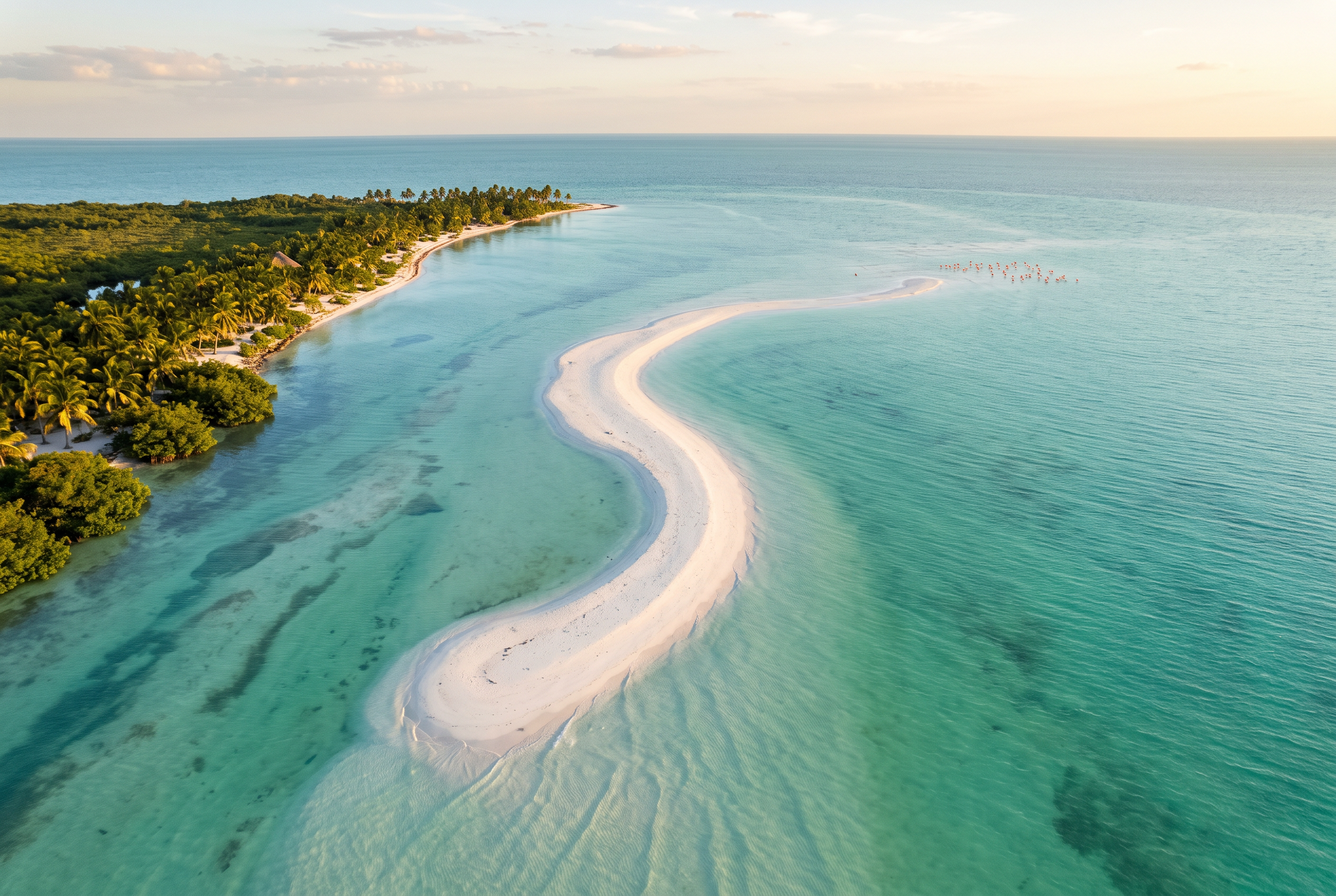
Punta Mosquito is the north-eastern tip of Isla Holbox, where a long low-tide sandbar extends ~2 km into the Gulf of Mexico. It’s one of the island’s two most-photographed landmarks (the other is the Punta Cocos bioluminescence point at the opposite end).
At low tide: a wide, firm, bright-white sand spit you can walk the length of in knee-deep water. Pelicans, sandpipers, cormorants. Occasionally flamingos in the shallow pools.
At high tide: mostly submerged. The sand track disappears, you can’t safely walk it, and the swim is deeper than it looks — currents funnel around the point and can pull strongly. This is why timing matters.
Timing the tide window
Holbox has two low tides per 24 hours (standard semi-diurnal pattern) but the daytime low tide is what counts — the night-time one you can’t use.
Rule of thumb:
- Arrive 1 hour before predicted low tide
- Walk out slowly — the sand revelation accelerates near low
- Turn around at low-tide hour — you need the returning water to still be at wading depth, not knee-deep rising
- You should be back on the beach within 2 hours of low
Our Holbox Now page shows today’s sea-level height curve from the Open-Meteo marine model — the low-tide time is marked. Check it the morning of your walk.
Don’t trust generic tide apps
How to get there
The start of the sandbar is at the north-east end of Playa Norte — roughly 3 km from the main town square. Three ways to cover it:
Options from town square
- Walk the beach
- 40–50 min each way, free, best for photos
- Bike (beach track)
- 15–20 min each way, rental 150–250 MXN/day
- Golf cart
- 10 min each way, 500–800 MXN half-day
See our golf cart rental guide for which operators allow beach-track driving — some rentals prohibit it to protect their vehicles from sand damage.
Walking out — what you’ll see
- First 500 m: regular beach, firm sand, almost nobody around (the crowds stop halfway down Playa Norte)
- 500 m–1 km: the beach narrows to the sandbar itself. Shallow water on both sides. Pelicans everywhere — the colony fishes along this stretch
- 1–1.5 km: knee-deep water for most of the walk. Sand so pale it reflects like a mirror. This is the photograph everyone comes for.
- 1.5–2 km: closed section (east-side turtle nesting beaches). Clearly marked. Rangers do check.
The whole walk is 60–90 minutes round trip at an easy pace. Allow 2 hours if you’re stopping for photos — which you will.
May–October: turtle nesting closure
Isla Holbox sits inside the Yum Balam Flora and Fauna Protection Area. From May 1 to October 31, green and hawksbill sea turtles nest on the east-facing beaches past the sandbar tip. The outer third of Punta Mosquito is closed to foot traffic for the full six months.
What this means in practice:
- You can still walk the first ~1.3 km of the sandbar
- Signs mark the no-go line — don’t cross it
- Rangers patrol daily — fines are real (up to 3,000 MXN per person)
- If you want the full-length sandbar experience, visit November through April
Guided turtle release
When flamingos actually show up
The classic Holbox flamingo photo isn’t from Punta Mosquito itself — it’s from the shallow lagoon pools just inland of the point. Flamingos are migratory. Reliable viewing windows:
- November–April: peak season, 20–200 birds in a typical sighting
- May: numbers drop as they migrate inland to Río Lagartos to breed
- June–September: occasional stragglers only
- October: first returnees start appearing
For guaranteed flamingos regardless of season, do the 3-Islands boat tour — Isla Pasión and Pajaros have year-round resident colonies.
What to bring
- Sport sandals or water shoes — the sand track can have sharp shell fragments, and flip-flops will get sucked off in soft spots
- Reef-safe sunscreen — almost no shade, you’re exposed for 90+ minutes
- Hat + UV sunglasses — the sand reflection is intense
- 1–2 L water per person — no vendors on the sandbar itself
- Dry bag or ziplock for phone — the sand plus humidity is hard on electronics
- Nothing valuable in a bag you leave on the beach — take valuables with you or leave them at the hotel
Honest warnings
- Watch the tide chart, not the clock. Weather can delay tide shifts. If the water is rising when you expected it to still be falling, turn around immediately.
- Don’t take golf-cart tour promises at face value. Some drivers will promise to “wait” while you walk out — then leave if they get a bigger fare. Pay on return, not up front.
- No safe-swim zones. This isn’t a swim beach. If your kids want to swim, Punta Cocos (south-west tip) or Playa Norte are the right call.
- Jellyfish stings — rare but happen in Jun–Sep. Pack an antihistamine; local pharmacies stock sting cream.
Frequently asked questions
How long is the Punta Mosquito sandbar?expand_more
About 2 kilometres at low tide, stretching east into the sea from the north-eastern corner of the island. Width varies with tide — a wide walkable spit at low tide, a submerged sandbank at high tide.
Is Punta Mosquito closed?expand_more
The tip of the sandbar and the east-side beaches are legally closed for turtle nesting from May 1 through October 31 every year. The west side of the point stays accessible year-round. Enforcement is strict — rangers patrol daily.
What is the best time of day to walk Punta Mosquito?expand_more
Within the 2 hours either side of low tide. On a day with low tide at noon, the window is roughly 10 AM–2 PM. Check the daily tide forecast on our /now page before you go — it uses Open-Meteo marine data.
Can I swim at Punta Mosquito?expand_more
The water is knee-to-waist deep for a long walk, so it’s great for wading, not for real swimming. The currents around the tip can be sudden — don’t swim past the sandbar edge. Playa Norte and Punta Cocos are the actual swim beaches.
Are there flamingos at Punta Mosquito?expand_more
Occasionally, yes — mostly in the shallows just west of the point. More reliably seen in Yalahau Lagoon and off the 3-Islands tour. Flamingo season peaks November through April.
How do I get to Punta Mosquito from town?expand_more
Walk 40–50 minutes east along Playa Norte, bike 15–20 minutes on the beach-side sand track, or take a 10-minute golf cart (confirm your rental allows beach-track driving — some don’t).
Are mosquitoes a problem at Punta Mosquito?expand_more
Despite the name, surprisingly not during the day — the open ocean breezes keep them away. The point was named for mangroves on the inland side, not the beach itself. At dawn and dusk in rainy season (Jun–Oct), cover up.
Verified businesses from the directory
Real listings from our Holbox directory — 6 shown.
Keep reading
Beaches · Where to swim + walk
The best beaches on Isla Holbox
A ranked, honest guide to Holbox’s beaches — Playa Norte, Punta Cocos, Punta Mosquito, Punta Coco Beach, and the sandbars — with what each is best for and how to reach them.
Nocturnal wildlife · Bioluminescence
Bioluminescence on Isla Holbox: when, where, how (2026)
Honest guide to seeing bioluminescence on Isla Holbox — real season (June–October), best viewing spot (Punta Cocos mangrove channel), new-moon timing, licensed kayak tours, and what to do (and not do) to actually see the glow.
Trip planning · Duration
How many days do you need in Holbox?
Three-, five-, and seven-day itineraries for Isla Holbox — plus who each length works best for and what to skip if you have limited time.
Every guide is grounded in our verified Holbox directory and free public data feeds (Open-Meteo weather, SunCalc moon, OpenStreetMap, Google Places). Updated October 20, 2026. Independent — no paid placements in article body.